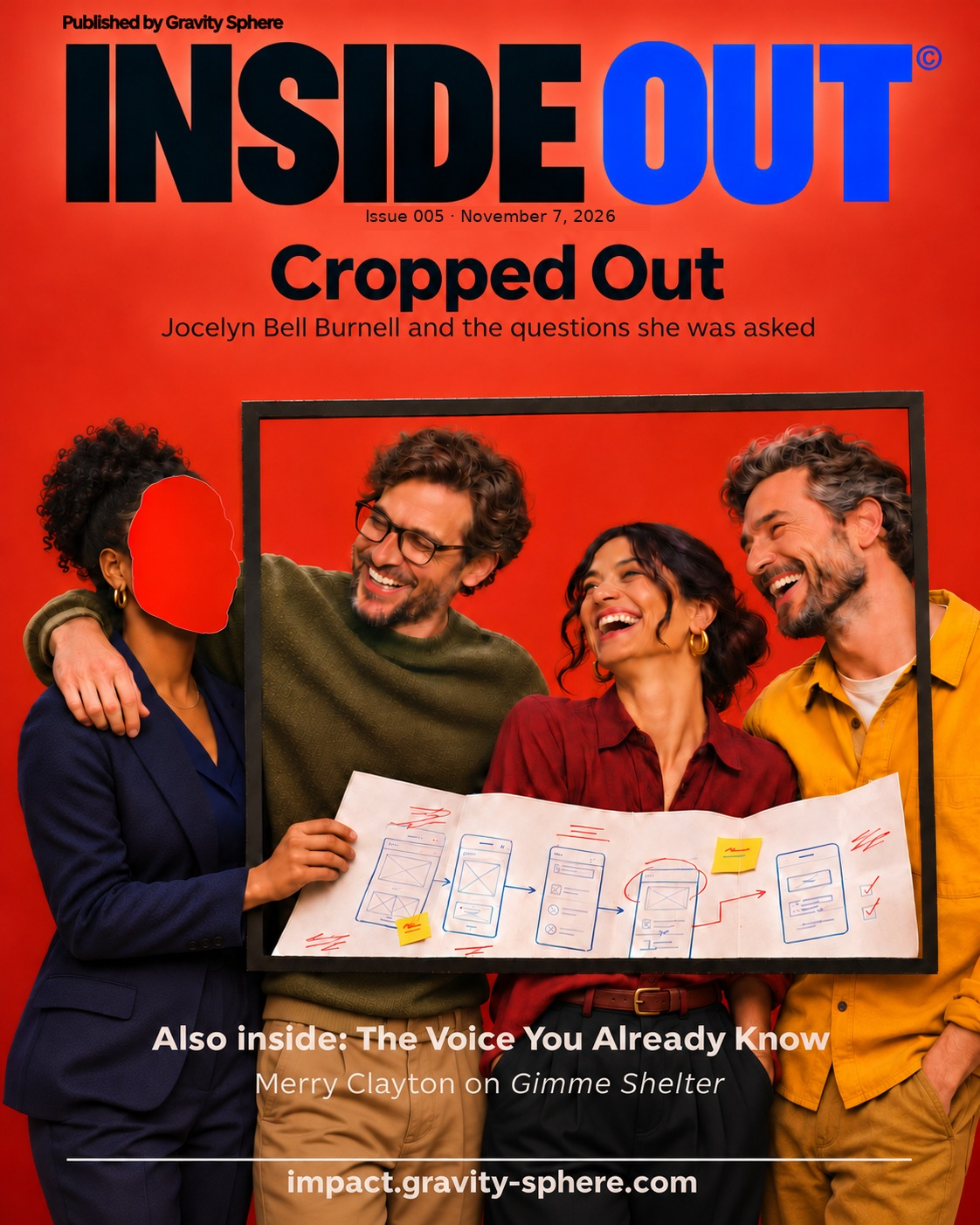
If I handed you a strip of chart paper and told you that somewhere on it was the first sign of a star nobody had heard before, you would give that piece of paper your full attention. And if I drew a little circle around the right place, you could put your finger on the discovery. There. I see it.
Now imagine I had handed you the same paper yesterday. Yesterday there was no circle. I had given you no reason to expect anything interesting. There was another stretch of paper just like it waiting to be read, and another after that. How long would your finger have rested on that spot before you moved on?
I ask because almost everybody who has ever heard the story of the first pulsar has had the advantage of the circle. We come to it knowing what was found. Jocelyn Bell had the paper.
In 1967, Bell was a graduate student at Cambridge. She had spent two years helping to build a radio telescope for a team studying quasars. Building it had meant working outside with tools, driving posts and soldering connections. When the telescope went into operation, the sky began arriving on her desk in the form of ink on paper. There could be hundreds of metres of it to examine in a day. One of the marks that caught her attention took up less than a quarter of an inch. [1, 2]
You could tell that part of the story by saying she had good eyes. It sounds like a compliment. It also makes it sound as if someone could have taken her place that morning, put on the right pair of glasses and found the same thing.
What Bell brought to that mark was all the paper she had already read. She had seen what the instrument usually drew. She knew that perfectly unremarkable things could leave an interesting mess on a chart. There was something familiar about this particular mess. She remembered having seen it before. It is a curious kind of expertise, to know a thing well enough to recognise the bit you cannot explain. If you ask the person how she did it, the answer is liable to take you back a good deal further than the morning of the discovery. In Bell’s case it takes you all the way out to a field with a sledgehammer. [1]
Knowing where to look still left her with the problem of getting a better look. If the chart moved faster, a short patch of ink would spread out on paper and she might be able to tell what was happening inside it. But the source had to be there when she was ready to record it. There is a considerable distance between underlining something in a finished account and being the student who has to produce it a second time. Until it came back, what she could show another person was a little mark and her own willingness to keep looking. [1, 2]
In November the faster recording caught it. A pulse, then another, a little over a second apart. The untidy mark contained something extraordinarily punctual. That solved the question of what the recording looked like. It made the question of what could possibly be sending it considerably harder. The team had a real signal and some good reasons to be careful about what they said it was. [2, 3]
In an oral history, Bell remembered calling at her supervisor Antony Hewish’s office one afternoon. The door was closed, unusual enough in that department for her to remember it years later. She knocked. Hewish asked her in. Inside were senior astronomers, among them Martin Ryle, the head of the group. They were discussing how they might announce what they had found. They had one source. They had no satisfactory explanation for it. There was no announcement to make that evening. Bell went home for supper. [3]
It would be easy to turn the closed door into a heavy piece of symbolism. That would do a small violence to her memory of the afternoon. She knocked and they let her in. She had a place in that conversation. What I like about her telling is what she took home from it. Here was an extraordinary mystery, and she was a young woman with a doctorate to finish and a diminishing supply of time and money. She could appreciate the scale of what might be out there and find its timing personally inconvenient. There’s a person in that detail whom you could lose in a more reverent account. [3]
The memory she singled out much later was finding another signal in another part of the sky. I would have guessed the first. But with one you could spend a long time wondering what your equipment had done to you. The second was similar enough to belong to the first and different enough to give it company. Bell could now entertain the possibility that there was a whole population of these things. She left the charts on Hewish’s desk and went on holiday. [3, 4]
There’s a question for an interviewer right there. How did it feel to leave those charts on somebody’s desk and finally go on holiday? Or this one. When the second signal appeared, what doubt could you set down at last? You might get a scientific answer. You might get a funny one about the doctorate. Either would tell you something about what it had been like to be Jocelyn Bell when there was still only one of these objects in the known universe and she was among the few people who had seen its trace.
When publicity came, Bell and Hewish both took questions. Looking back as Jocelyn Bell Burnell, she described a familiar division of labour in those interviews. Journalists wanted Hewish to explain the significance of the discovery. For Bell they had questions about her boyfriends, her hair colour, her figure. Photographers asked if she would open more buttons on her clothes. In one later interview, the person listening to this account could scarcely believe it. Bell Burnell’s recollection was that at the time it was perfectly ordinary. [5]
That last detail catches me. If it had struck everyone as extraordinary, somebody might have broken the rhythm. Imagine how little it would have taken. The reporter finishes writing down Hewish’s answer. He turns towards Bell, as he was going to do anyway. Except this time he asks her to show him the chart. Everything else about the occasion can stay the same. There can still be photographers. The professor still has his say. Only one person has to be curious about a different thing, and a reader opening the paper the next morning gets to meet a different woman.
Think, too, of what a perfectly accurate account of a bad interview can do. The reporter can get the professor’s explanation right. He can spell the student’s name correctly. The picture can be a good likeness. Nobody has to remove Bell from the photograph. A girl looking at that coverage could see a young woman at Cambridge and still have very little idea what a young woman at Cambridge was allowed to know. The damage is in the question that never makes it onto the page. How could a reader know to miss the answer?
In 1974 Hewish shared the Nobel Prize in Physics with Ryle. Bell Burnell was not among the recipients. It is often the first thing people learn about her. Having learned it, we tend to arrive with a question of our own. How angry was she? Once again, before the woman has said a word, somebody has picked the part of the story she is going to tell. [3, 6]
Her answer had room for more than one feeling. A colleague hurried to bring her the news, apparently expecting her to be furious. She remembered being pleased at what the prize meant for astronomy. She was also a mother by then, and the sight of men receiving the prize while a woman looked after a baby carried a message she could hardly fail to notice. Both belonged to her experience of the day. You have to stay for the second part of the answer whichever part you came hoping to hear. [3]
There is a temptation, in trying to give somebody her due, to make every other person in the picture smaller. Pull the professor out. Put the student in his place. But imagine having the two of them in front of you again. Why would you want to lose what either could tell you? Hewish had devised the instrument. Bell had learned to read it closely enough to recognise something it had never been designed to find. A good afternoon’s conversation could have started in that field and ended with two people looking at the same chart, each able to show you something the other had helped make possible. [1, 2]
Years later, people deciding whom to recognise did put Bell Burnell’s name on a prize. In 2018 she received a Special Breakthrough Prize in Fundamental Physics. The money could have made for a satisfying last line in a story about a debt finally paid. She found something else to do with it. She gave the award money to support students from groups underrepresented in physics. A student still has to buy food and find somewhere to live while working out whether the thing she thinks she saw will ever show up again. Bell Burnell had once gone home from a meeting about an astonishing discovery with her own dwindling funds very much on her mind. I like knowing where the money went. [3, 7]
I wonder who came to mind for you while you were reading this. Perhaps somebody at work who can look at a finished plan and go straight to the place where it might fail. You have watched them do it often enough that you automatically send them the next one. When you present the plan later, the weak spot has been fixed. There is nothing there to draw attention to the person who found it. In fact, the better they did their work, the less there is for anybody else to see.
You may remember thanking them. They may remember it too. What would the people who heard you present it remember? Would they know whose judgement they were relying on that afternoon? Would it occur to them to ask that person a question the next time you were both in the room?
When I try to picture Bell now, I come back to the interval before the signal returned. We know it came back. She had to go to work without that assurance. Of all the things a reporter might have asked her, that is the one I would have stayed to hear. What made you come back to look again?
See how your contribution comes across to others.
The Voice You Already Know
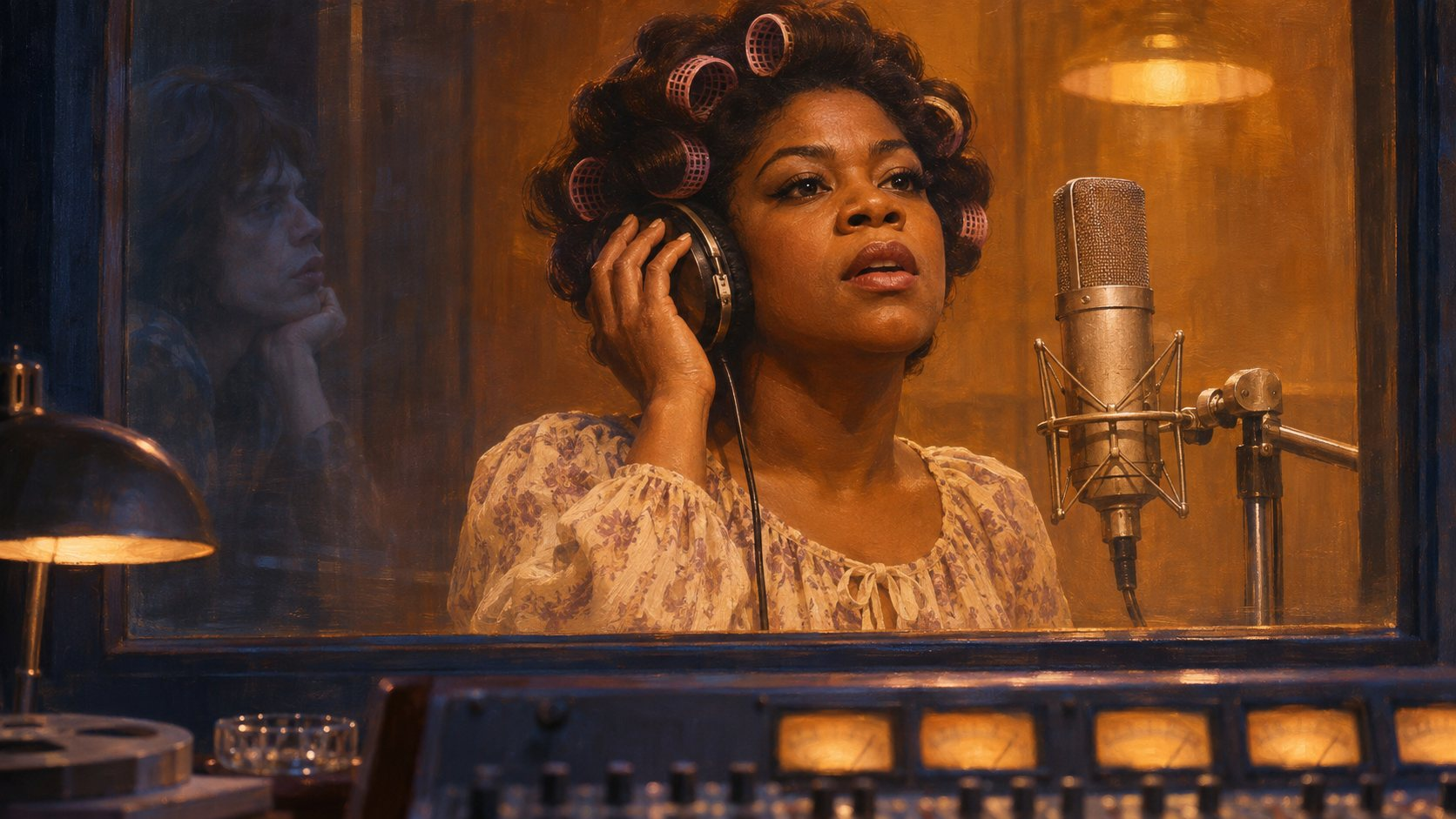
Editorial illustration of Merry Clayton before a take. The staging is imagined.
Editorial illustration of Merry Clayton before a take. The staging is imagined.
There’s a moment in the Rolling Stones’ “Gimme Shelter” when a woman’s voice cracks. If you know the record, you may already be able to hear it. You might even know when to draw breath if you’re singing along. What name would you give someone who asked whose voice that was? [8]
Her name is Merry Clayton. When the call came, she was pregnant, her hair was in curlers, and she was getting ready for bed. Some musicians from England needed a singer. She tied a scarf over the curlers, pulled a coat on over her silk pyjamas and went to work. We know the song well enough to anticipate what happens next. She had been planning to sleep. [8, 9]
At the studio, Clayton told the musicians she would sing the part twice and go home. She and Mick Jagger talked about what she could do with it. She remembered wanting the sound to carry like a cry to the world. When she reached for it, her voice cracked. [10]
I like that she gets to tell us what she was reaching for. From this side of the record, it’s easy to treat that sound as inevitable. The band comes in, the song builds, and there it is, exactly where you remember it. But there was a night when nobody in that room had heard it yet. There was a breath she had to take before any of us could know it by heart.
A year later Clayton recorded “Gimme Shelter” again. This time it was her record. In a 1970 interview, she remembered having the flu at the Stones session and barely taking in the words Jagger was singing. Doing it over gave her a chance to attend to the whole lyric. I love the difference in what she and a listener might want from a second take. I’d want to know if she could make that sound again. She wanted to hear what the song was saying. [11]
Decades later, the documentary 20 Feet from Stardom let audiences hear her vocal on its own. Try listening to it that way, then go back to the full record. The instruments come back. So does Jagger. Clayton goes back to the same place in the mix she has occupied for years. See how easily you can find her now. [8]
And if somebody’s there with you when her part comes around, there’s time for a small introduction.
Listen. That’s Merry Clayton.
See how you come across when you speak up.
Reporting notes
- University of Cambridge · Journeys of discovery
- National Geographic · The pioneer who found the first pulsar
- American Institute of Physics · Bell Burnell oral history
- University of Glasgow · Me by Dame Jocelyn Bell Burnell
- The Open University · Bell Burnell interview transcript, press interviews
- Nobel Prize in Physics 1974 · Official award record
- Breakthrough Prize · Bell Burnell on the use of the award
- National Endowment for the Arts · Morgan Neville interview
- GQ · Clayton remembers dressing for the session
- American Songwriter · Clayton on her vocal choices
- Record World · Interview with Merry Clayton, July 11, 1970